Parts of this page are only available in German.
The Systematic Scientific Study of Altered States of Consciousness
How can psychedelic and other altered states of consciousness be systematically described, measured and compared?
 Prof. Dr. Timo Torsten Schmidt
Recording
Photos
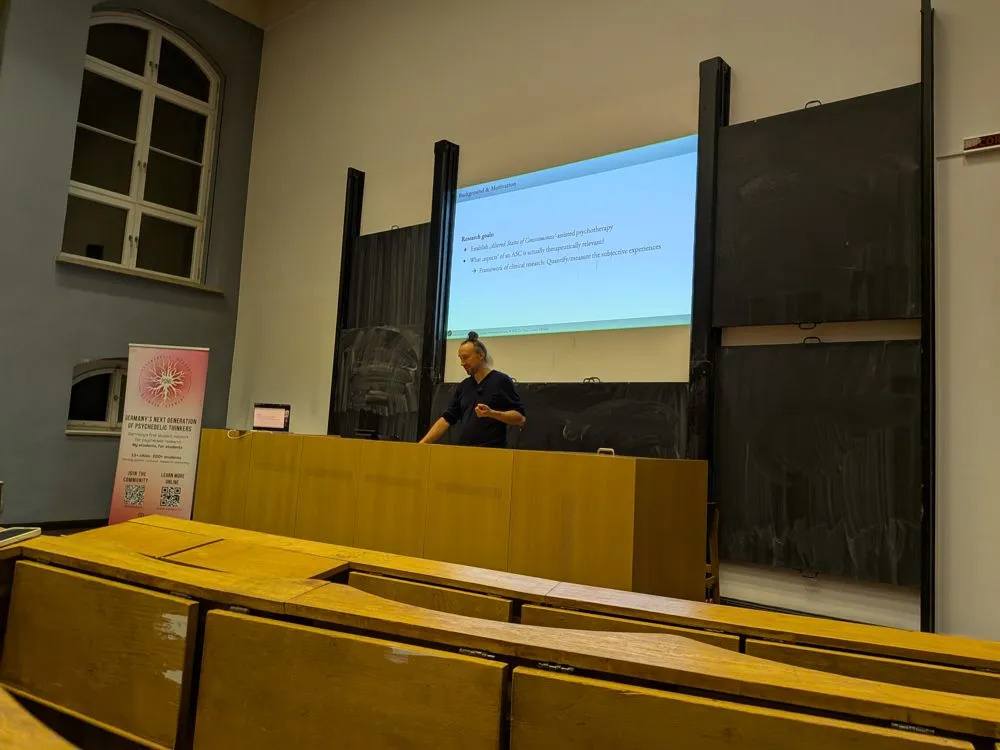
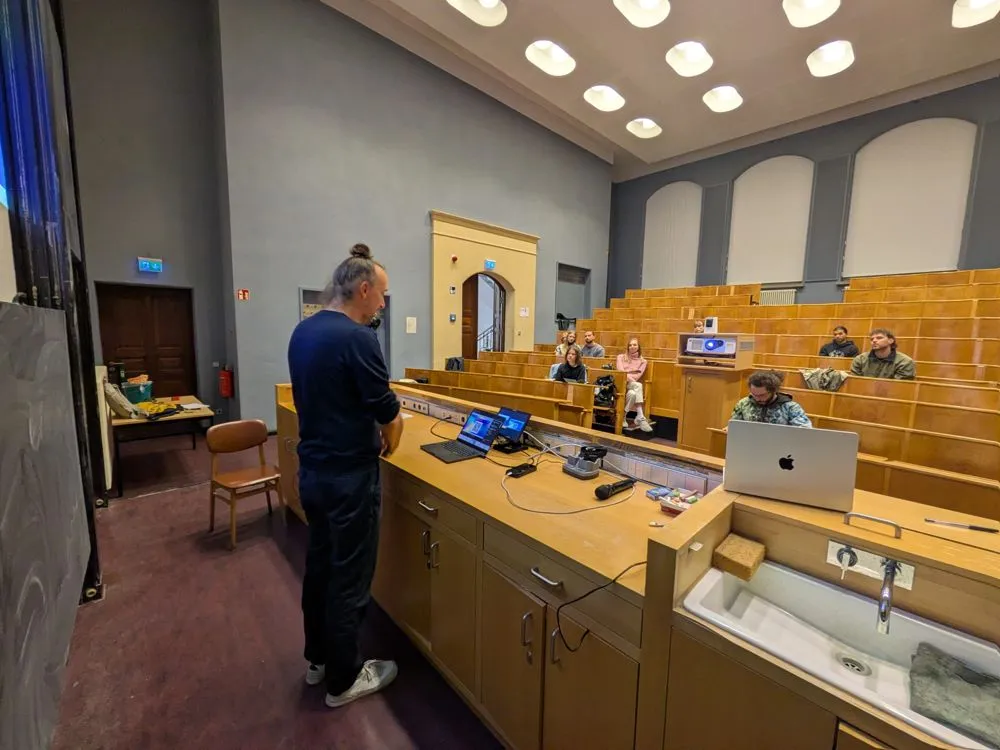
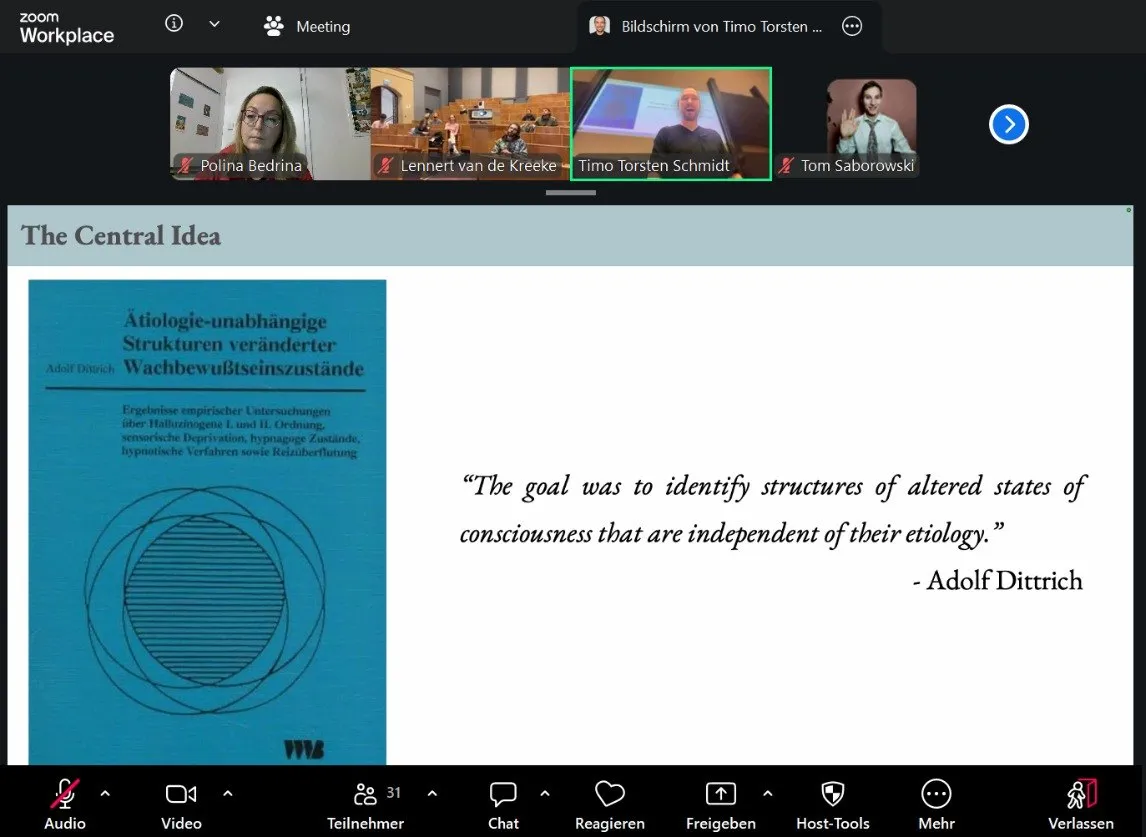
What it's about
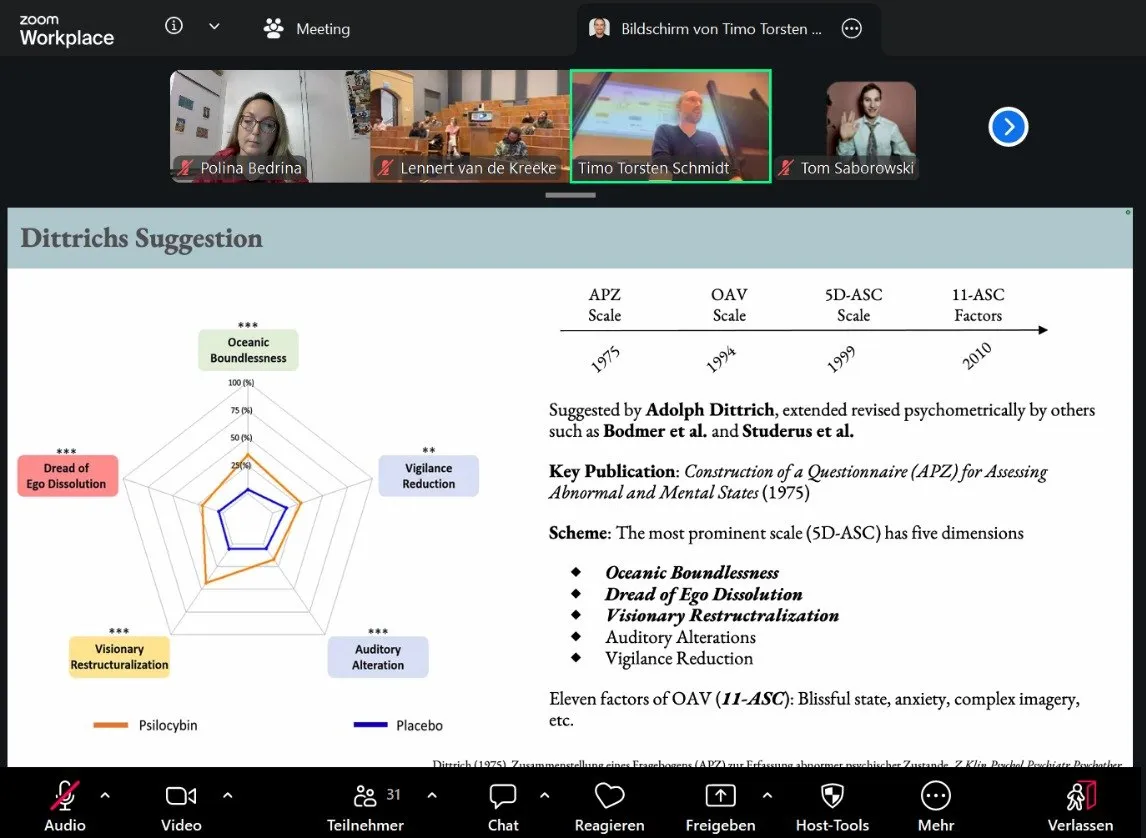
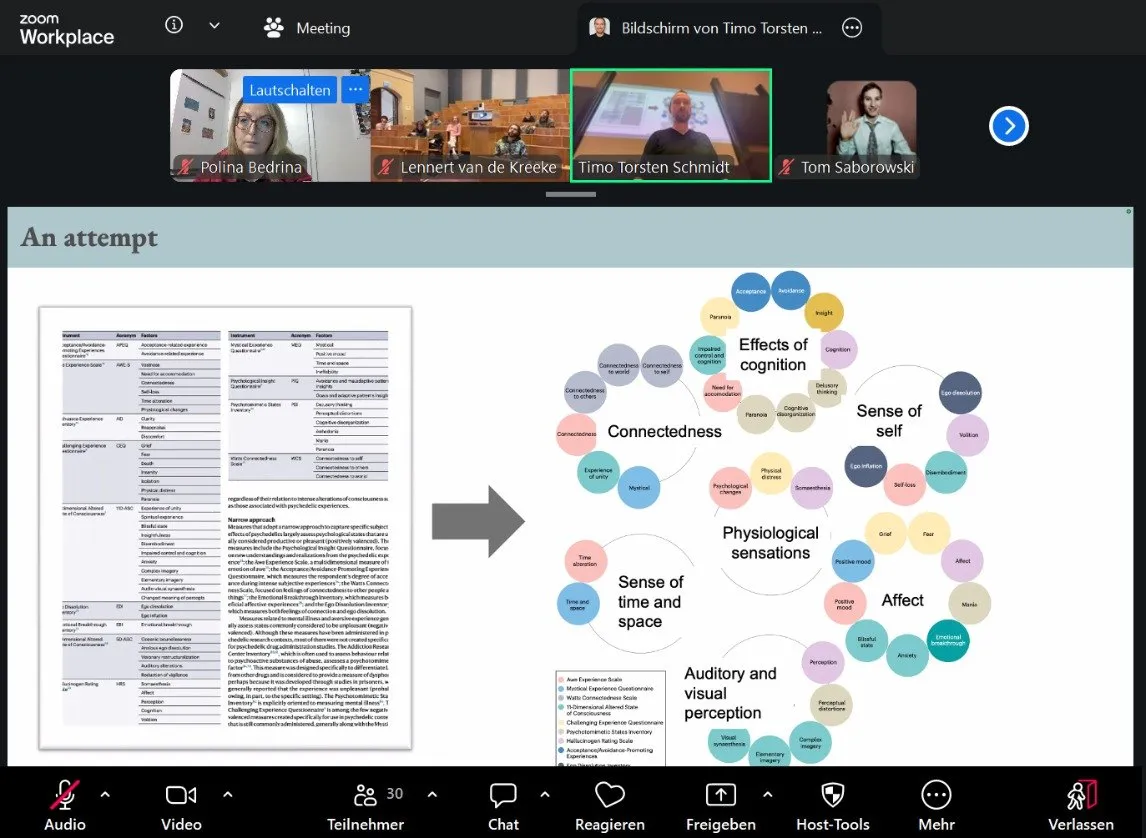
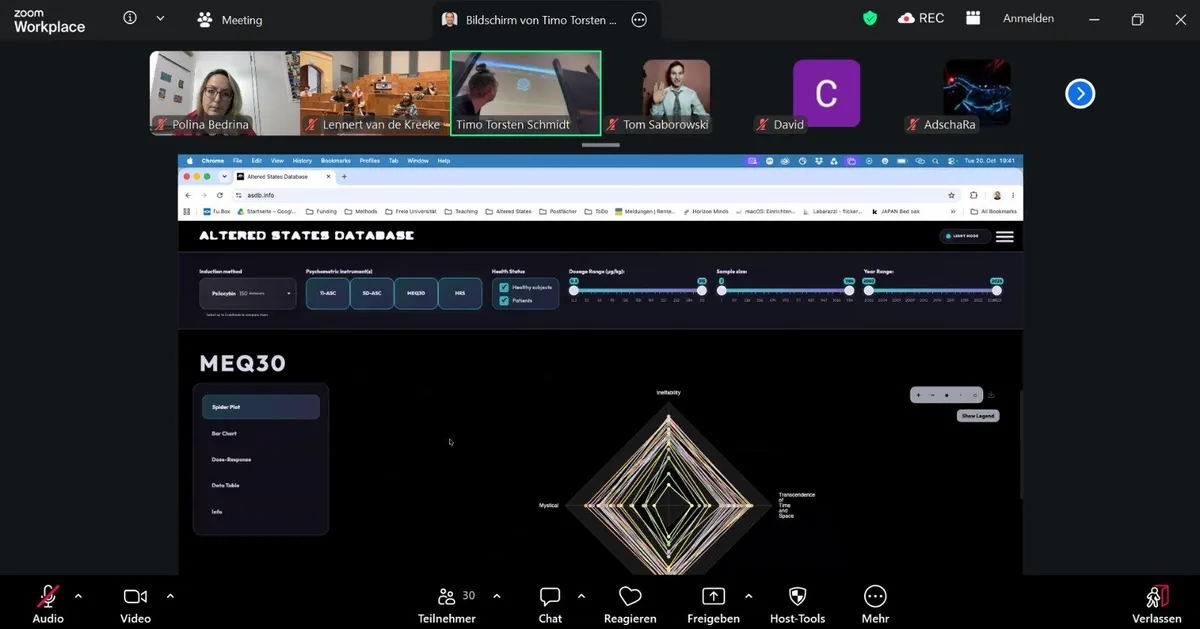
Altered states of consciousness, particularly those induced by psychedelics, involve profound changes across perception, emotion, cognition and self-experience. The talk introduces approaches for systematically describing, quantifying and classifying these multidimensional experiences. Drawing on the Altered States Database (ASDB), Timo T. Schmidt shows how psychometric data accumulated across experimental studies enable quantitative comparisons between different substances and other consciousness-modifying techniques. It closes on how large-scale and citizen-science approaches can help map the diversity of altered experiences beyond traditional laboratory settings.
A 45-minute talk, followed by Q&A.
About the speaker
Prof. Dr. Timo Torsten Schmidt
Timo Torsten Schmidt is a cognitive neuroscientist and Professor of Cognitive Neuroscience at Medical School Berlin (MSB), where he leads the MSc Cognitive Neuroscience programme. His research focuses on the neuroscience and phenomenology of altered states of consciousness, including psychedelic states, meditation and stroboscopic light stimulation. He founded the Altered States Database, a large-scale resource for the quantitative comparison of subjective experiences across different methods of inducing altered states, and is a co-founder and board member of CIRCE, a non-profit organisation promoting interdisciplinary and participatory research on consciousness and altered states.
In cooperation with

A joint lecture by the PSNG and the BPSA.
Further reading
- asdb.info – an open-science database of questionnaire data on altered states, induced by substances and by non-drug methods. Compare them yourself online.
- Fort, L. D., Costines, C., Wittmann, M., Demertzi, A., & Schmidt, T. T. (2025). Classification schemes of altered states of consciousness. Neuroscience & Biobehavioral Reviews, 175, 106178.
- Prugger, J., Derdiyok, E., Dinkelacker, J., Costines, C., & Schmidt, T. T. (2022). The Altered States Database: Psychometric data from a systematic literature review. Scientific Data, 9, 720.
- When
- Tuesday, 20 October 2026
- 19:00 – 20:30, incl. apéro
- Where
- Zoom and in person: HU Berlin, Philippstraße 12, building 4, lecture hall 4
- Language
- English
In numbers
- attendees
- 38
- of which online
- 30